


Redesigning an insurance claims journey that increased completed claims by 20%
INSURELLO
Role:
Lead Product Designer
Responsibilities:
UX Strategy
UI Design
User Research
Prototyping
Design System
Brand Refresh
Workshop Facilitation
Overview
Insurello helps people claim compensation after accidents and injuries by managing the entire insurance process on their behalf.
The existing customer journey had evolved over several years into a complex experience. Long forms, inconsistent navigation and confusing medical terminology created unnecessary friction, resulting in customers abandoning claims or requiring support from the call centre.
I was brought in to redesign the end-to-end claims experience with one clear objective:
Increase completed insurance claims and information accuracy while reducing customer effort and operational support.
Following launch, completed claims increased by 20% within 30 days, while customer information became significantly more accurate, reducing manual follow-up for claim specialists.

The Challenge
The previous claims flow had grown organically over time.
Customers were expected to complete long, information-dense pages containing multiple questions, warnings and instructions. Progress through the journey wasn't always obvious, leading to uncertainty about how much remained.
Research and analytics highlighted several recurring problems:
Long scrolling pages created cognitive overload.
Medical terminology confused customers.
Important reassurance messaging was easily missed.
Customers frequently repeated information they had already entered.
The business relied heavily on its customer support team to help people complete claims.
The goal wasn't simply to modernise the interface—it was to redesign the entire experience around confidence, clarity and completion.
Designing for confidence, not complexity
Every design decision was focused on reducing customer effort, increasing confidence and data accuracy and helping users complete their claim without requiring assistance.
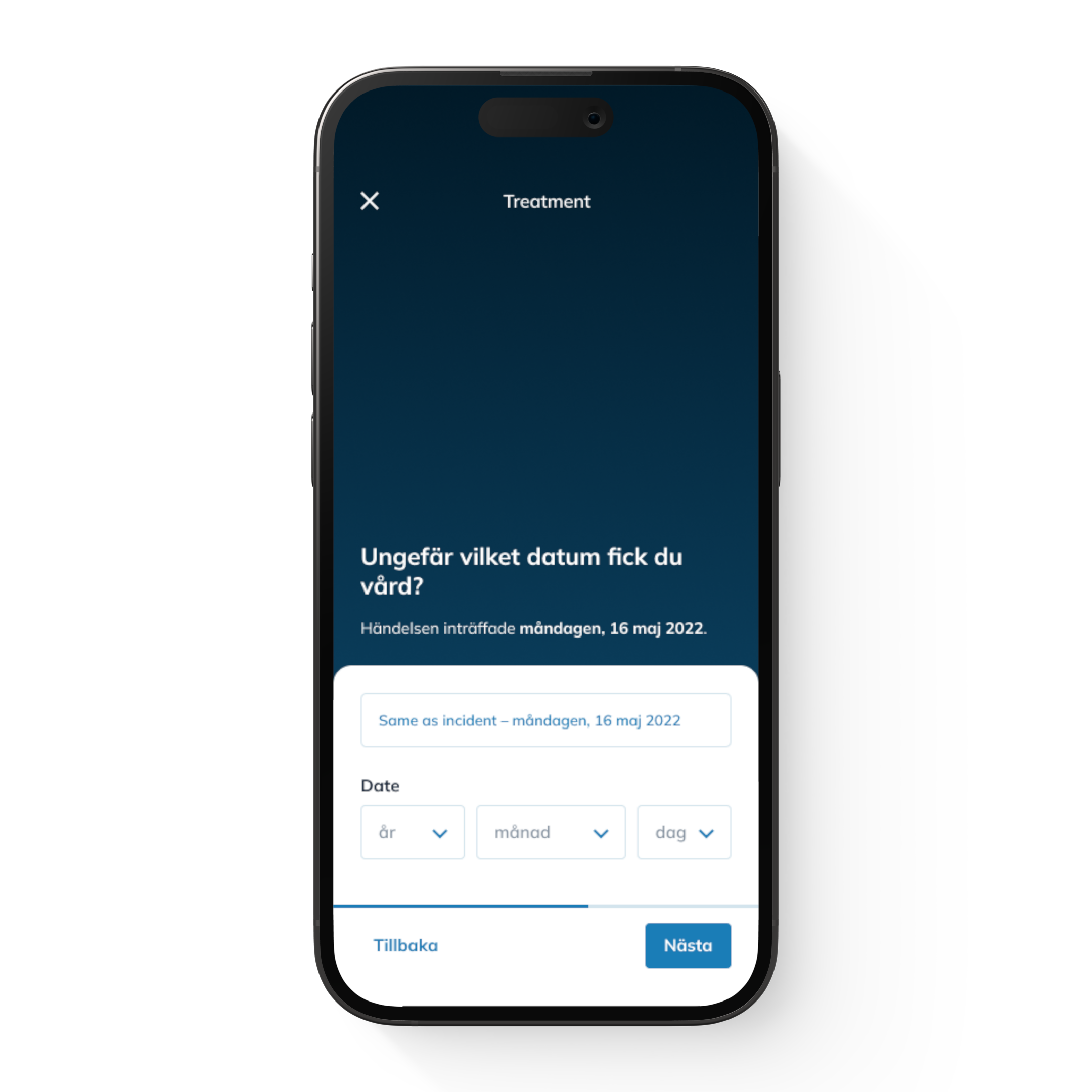
From long forms to guided conversations
Problem
Customers faced long, intimidating forms.
Solution
One question per screen
Clear progress
Mobile-first flow
Autosave


Making medical information understandable
The challenge
One of the most difficult parts of the claims process was asking customers to describe their injury using medical terminology. Many users struggled to identify the correct option, spending time searching through unfamiliar language or selecting inaccurate descriptions.
This created frustration for customers and resulted in inconsistent information being submitted to claim specialists, increasing the need for manual clarification.
The solution
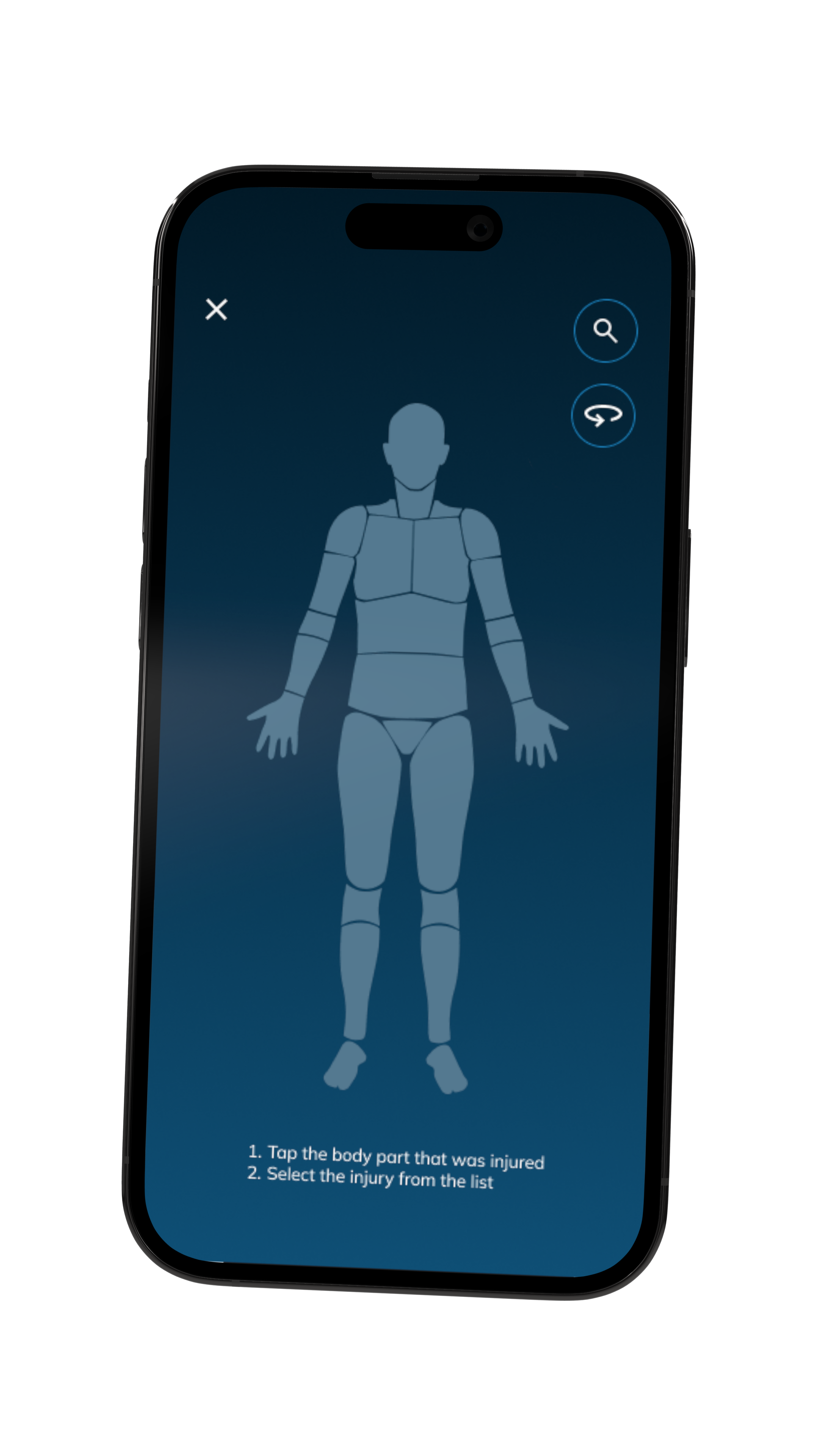
Rather than expecting customers to understand insurance and medical terminology, I redesigned the experience around how people naturally describe injuries.
A visual body selector allowed customers to first identify the affected area of their body, before progressively narrowing down the relevant injury type. This transformed a complex search task into a simple, familiar interaction.
The impact
The new approach reduced effort for customers while improving the quality and consistency of information captured by the business.
By making the journey easier to understand, customers could provide more accurate details earlier in the process, helping claim specialists work more efficiently and reducing unnecessary follow-up.
Before
Searching through unfamiliar medical terms
After
Selecting an injury through an intuitive visual experience


Helping customers submit better evidence
The challenge
Photographic evidence is an important part of many insurance claims, but customers often did not know what information was required or how to capture suitable images.
Poor quality submissions—including unclear images or photos taken at the wrong stage of recovery—created additional work for claim specialists and delayed the claims process.
The solution
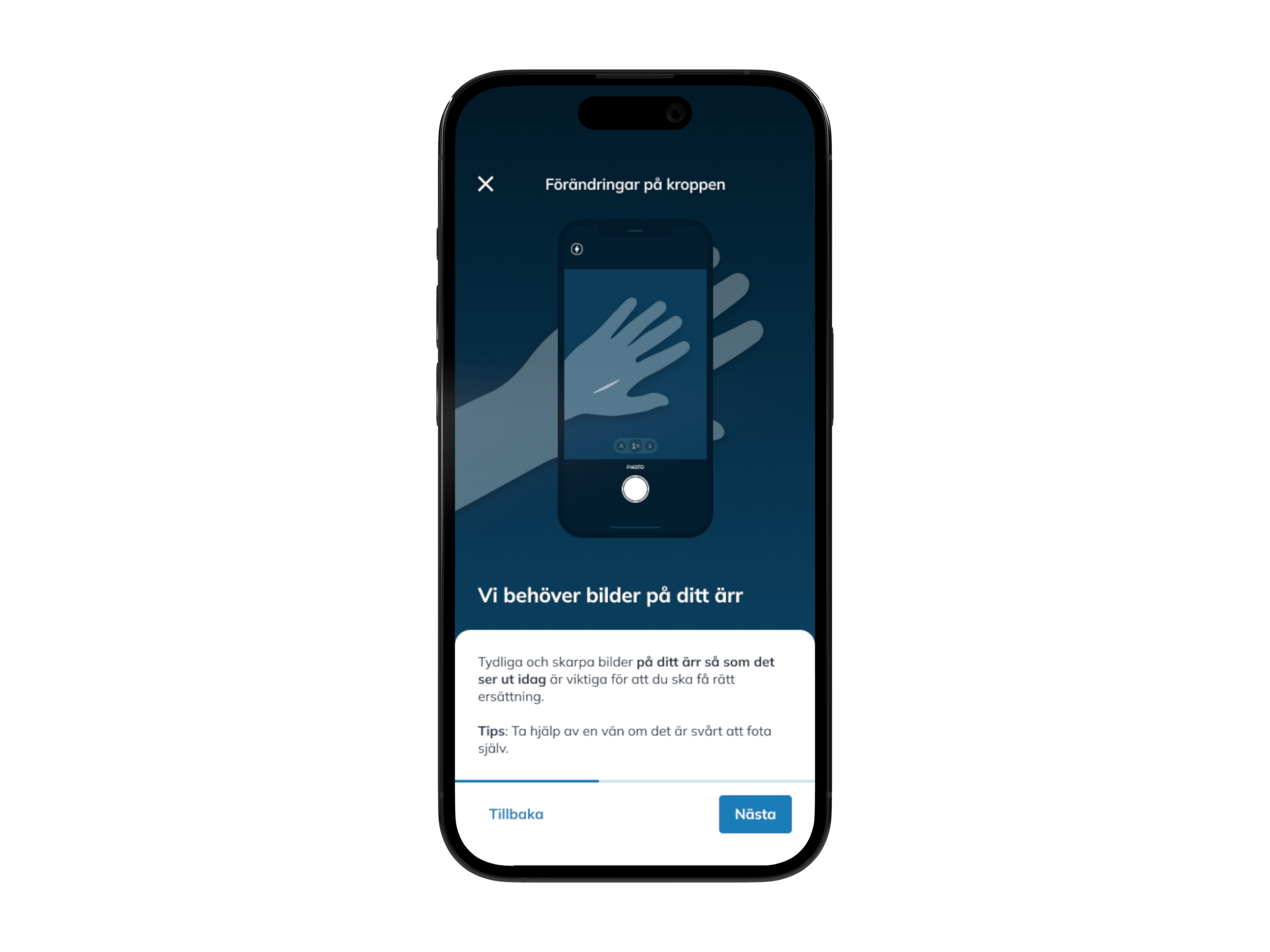
I redesigned the evidence submission experience to guide customers through the process.
Instead of simply providing an upload button, the new journey explained what makes a useful photo and guided customers through capturing the right evidence at the right time.
The experience combined:
Clear instructions before taking photos
Examples of acceptable evidence
Simple upload interactions
Reassurance that customers were providing the right information
The impact
By helping customers understand what was needed before submission, the quality of evidence improved and unnecessary follow-up was reduced.
This created a smoother experience for customers while helping claim specialists process cases more efficiently.
Before
Customers uploaded evidence without clear guidance
After
A guided submission process that improved the quality of information received

Creating a faster, more reliable signing experience
The challenge
Completing a claim requires customers to formally approve and sign their submission. Insurello's existing signing experience relied on a third-party solution that created several challenges.
The service was expensive to maintain, introduced unnecessary dependency on an external provider and provided a poor customer experience. The signing process could take up to 90 seconds to respond, creating uncertainty at a critical point in the journey where customers had already invested significant time completing their claim.
The experience was also not optimised for mobile devices, making longer signatures particularly awkward on smaller screens and resulting in a clunky final step before claim submission.
The solution
I designed an in-house signing experience built around BankID, creating a faster, more seamless and fully integrated part of the claims journey.
The new solution was designed specifically around customer behaviour, including:
A native signing flow integrated directly into the claims experience
Optimised landscape orientation for longer signatures on mobile devices
Clear confirmation states to reassure customers that their claim had been successfully completed
A simpler, more consistent experience aligned with the rest of the redesigned journey
The impact
Replacing the third-party solution improved both the customer experience and operational efficiency.
The new signing flow removed unnecessary delays, reduced reliance on external technology and created a smoother final step in the claims journey.
By bringing the experience in-house, Insurello gained greater control over performance, future improvements and the overall customer journey—turning a previously frustrating technical requirement into a seamless part of the product experience.


Business Outcomes
20% increase in completed claims
Within 30 days of launch, completed insurance claims increased by 20%, demonstrating that reducing friction throughout the journey had a direct impact on customer conversion.
Improved data quality
Smarter forms and guided interactions resulted in more complete and accurate customer information, reducing manual follow-up by claim specialists.
Reduced support demand
A clearer, more intuitive experience enabled more customers to complete their claim independently, reducing reliance on customer support.
A scalable product foundation
The introduction of a design system and modern visual language gave Insurello a consistent foundation for future product development while strengthening the overall brand experience.

Reflection
This project reinforced the importance of designing for confidence, especially when users are navigating complex and emotionally challenging situations.
Insurance claims are inherently unfamiliar processes, and the biggest opportunity was not simply making the interface cleaner—it was reducing uncertainty at every stage of the journey. By understanding where customers felt overwhelmed, confused or lacked confidence, we were able to transform a complicated claims process into a guided experience that supported users from start to finish.
The redesign demonstrated how thoughtful product design can create measurable business impact. Simplifying interactions improved claim completion rates, while better guidance and smarter data capture improved the quality of information received by the business. At the same time, creating a scalable design system and bringing key experiences such as signing in-house provided a stronger foundation for future product development.
Ultimately, the project showed that the best digital experiences are created when customer needs and business goals are treated as the same challenge: making complex processes feel simple, clear and effortless.
